
2026 3rd International Symposium on Artificial intelligence, Optoelectronics and Optics Technologies
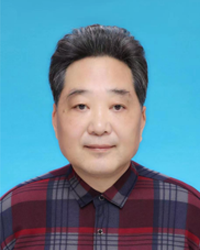
Northeastern University, China
Qi Wang is Associate Dean, Professor, and Ph.D. advisor at the School of Information Science and Engineering, Northeastern University; Distinguished Professor under the Ministry of Education's "Changjiang Scholars" Program; Young Top Talent under the National "Ten Thousand Talents Program"; and Young Top Talent under the Liaoning Province "Xingliao Talents Program." His primary research areas include biosensors, fiber-optic sensing, and computational imaging.
He has published over 200 papers in high-impact journals such as the IEEE Transactions series, BB, and SNB, and holds 30 authorized patents; he has served as the chief editor of five textbooks and was invited to co-author two English-language monographs. He has led seven projects funded by the National Natural Science Foundation of China (including the National Youth Excellence Program, two sub-projects under the National Major Science and Technology Special Projects, a National Key R&D Program project, as well as Key Projects, General Projects, and Youth Fund projects of the National Natural Science Foundation) and more than 20 provincial and ministerial-level projects.
He has received one First Prize in Natural Sciences from Liaoning Province; one Second Prize in Natural Sciences from the Chinese Association of Automation; one Second Prize in Innovation from the Entrepreneurship Award of the China Invention Association; two Second Prizes in Natural Sciences from Liaoning Province; and one Second Prize in Natural Sciences from Hebei Province. He has also received the Second Prize for Teaching Achievements from the Chinese Society of Instrumentation, as well as First and Second Prizes for Teaching Achievements from Liaoning Province.

Jilin University, China
Quanjun Li is Professor at the State Key Laboratory of High Pressure and Superhard Materials, Jilin University. He has been dedicated for an extended period to research on high-pressure structural phase transitions, and the regulation of superconductivity and optoelectronic properties in low-dimensional materials under high-pressure conditions.
He has published more than 190 SCI-indexed papers in prestigious journals including Adv. Mater., J. Am. Chem. Soc., Acta Mater., Adv. Funct. Mater., and Natl. Sci. Rev., and holds over 10 authorized domestic and international invention patents. He has hosted numerous national key projects, general projects funded by the National Natural Science Foundation of China, sub-projects within key international cooperation initiatives, and has participated in multiple national key research and development programs, as well as other significant national projects.
Currently, he serves as a member of the Professional Committee on Solid Local Structure and Total Scattering Techniques of the Chinese Crystallographic Society, a member of the High-Pressure Chemistry Professional Committee of the Chinese Chemical Society, and a board member of the Jilin Provincial Physical Society.

Almaty Management University, Kazakhstan
Arman Komekbayev serves as Dean of School of Digital Technologies and Economics at Almaty Management University and Founder of Engineers Without Borders Kazakhstan. Graduated in aerospace engineering from Bauman Moscow State Technical University, he boasts full-cycle R&D experience in satellites, launch vehicles, mining equipment and UAV structural simulation.
He has worked at space research institutes, global mineral firms and AI consulting companies, specializing in FEA simulation, V2X smart transport and enterprise AI deployment. With years of higher engineering education management, he built an industry-university-research platform focusing on AIoT, industrial intelligence and humanitarian engineering for sustainable infrastructure in Central Asia.
He holds Ansys simulation & advanced English certifications and has published papers on aerospace, structural mechanics and intelligent transportation.

Almaty University of Power Engineering and Telecommunications, Kazakhstan
Dr. Kuanysh Aplipbayev is Associate Professor & Head of Space Engineering Department at AUPET, holds full academic degrees in Mechanics & Mathematics from Al-Farabi Kazakh National University, specializing in microsatellite control systems.
He previously managed satellite R&D at Kazakhstan's national aerospace institute and now conducts aerospace teaching and research. He received advanced training on micro-nano satellites and spacecraft control in Russia, UK, Germany and Japan. With over 70 indexed papers on star trackers and satellite attitude control, he led the EU ERASMUS+ aerospace robotics education project.
He organizes robotics competitions and youth tech labs to popularize aerospace and intelligent engineering.

Shenyang Institute of Automation, CAS, China
Prof. Feng Qi is a Professor and Ph.D. Supervisor at Shenyang Institute of Automation, Chinese Academy of Sciences, and a member of the Academic Committee. He received his Bachelor's degree from Zhejiang University, and his Master's and Ph.D. degrees from Katholieke Universiteit Leuven, Belgium.
He has conducted terahertz research at RIKEN in Japan, Goethe University in Germany, and the University of Birmingham in the UK. As Principal Investigator, he has led multiple national-level projects including key programs in high-tech fields, National Key R&D Program, and National Natural Science Foundation of China. His research interests span microwaves, lasers, radar, and acoustics.
He currently serves as Director of the Key Laboratory of Terahertz Imaging and Sensing, Liaoning Province, Chairman of the Academic Committee of the Guangdong Metamaterial Microwave RF Laboratory, and Standing Committee Member of the Terahertz Branch of the Biophysical Society of China.

Institute of General Physics of the Russian Academy of Sciences
Prof. Robert Zakharian is the Director of the Institute of General Physics of the Russian Academy of Sciences, and a world-renowned expert in the field of optoelectronic detection.
He has dedicated his career to photoacoustic spectroscopy and has published numerous academic papers and obtained several patents in this field. The photoacoustic spectroscopy equipment he has developed can be applied in carbon sink monitoring, fire safety, emergency environmental protection, electric power, energy, mining, agriculture and forestry, marine engineering, green new materials, chemical engineering, semiconductors, and many other fields, offering significant cost advantages and immense market value.